Scientists propose flexible protective layer to solve silicon battery expansion problem
Researchers writing in The Innovation say a thin, flexible interface made of lithium fluoride, lithium oxide and lithium nitride could prevent silicon anodes from cracking during charging. Silicon can store about 11 times more energy than graphite but expands up to 400 percent, destroying the protective solid electrolyte interphase. The proposal remains a concept and has not been demonstrated in commercial batteries.
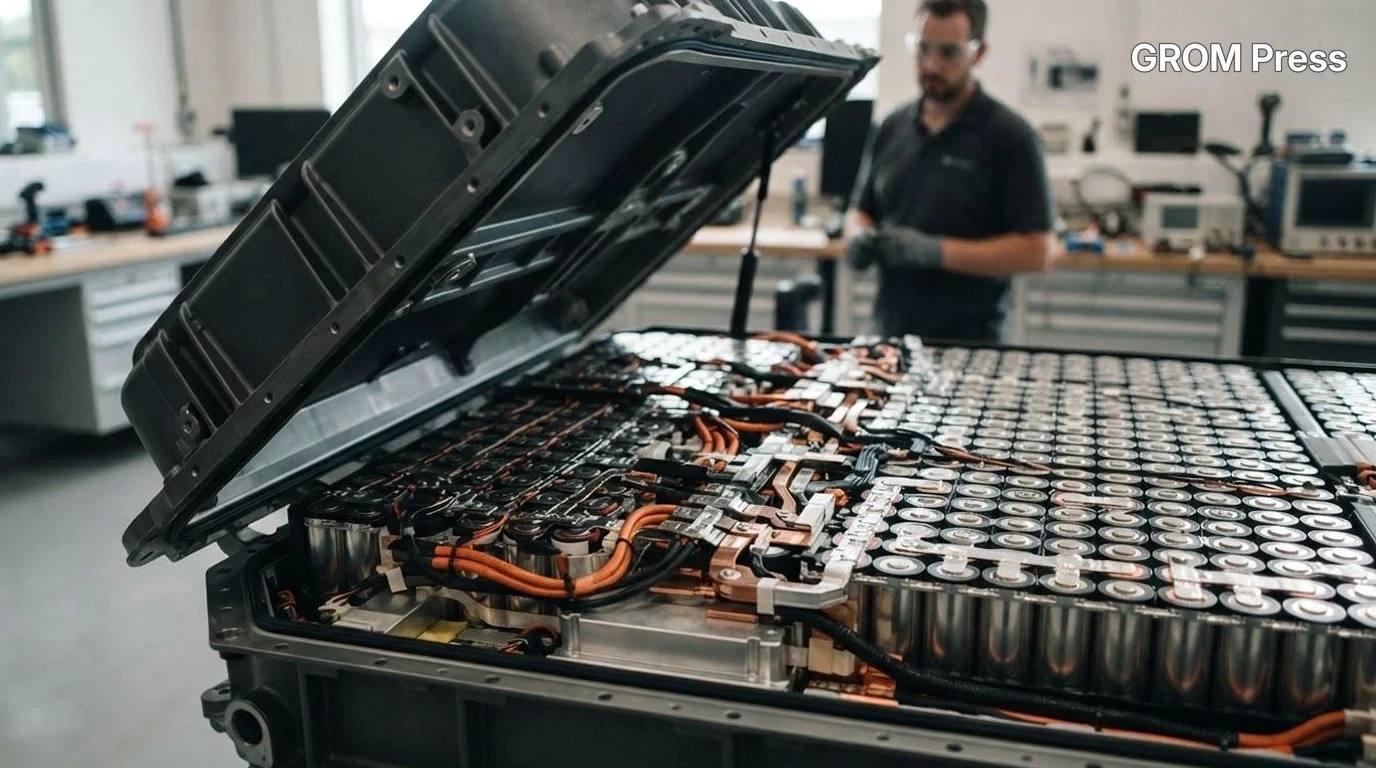
The main event is a new review article published in the journal The Innovation, in which researchers propose a solution to the main obstacle preventing silicon from replacing graphite in lithium-ion battery anodes. Silicon can store roughly 11 times more energy than graphite, but its volume can increase by up to 400 percent during charging. This expansion cracks the protective solid electrolyte interphase, or SEI, allowing the electrolyte to react repeatedly, consume battery resources and impair lithium-ion transport.
Read the full story on GROM.PRESS
Source: GROM.PRESS