Milky Way simulated star by star on three supercomputers
The PHEASANT project presented a star-by-star simulation of the Milky Way at the SC 2026 conference in Chicago, held from 15 to 20 November. The model uses about 3.4 billion particles and combines three supercomputer systems with AMD, Intel and Nvidia hardware. An AI model developed by Keiya Hirashima of the Japanese institute Riken accelerates calculations of gas evolution around supernovae by 20 times, predicting the state of gas 100,000 years ahead instead of sequentially calculating 100 years of evolution. The project is led by Professor Michiko Fujii of the University of Tokyo.
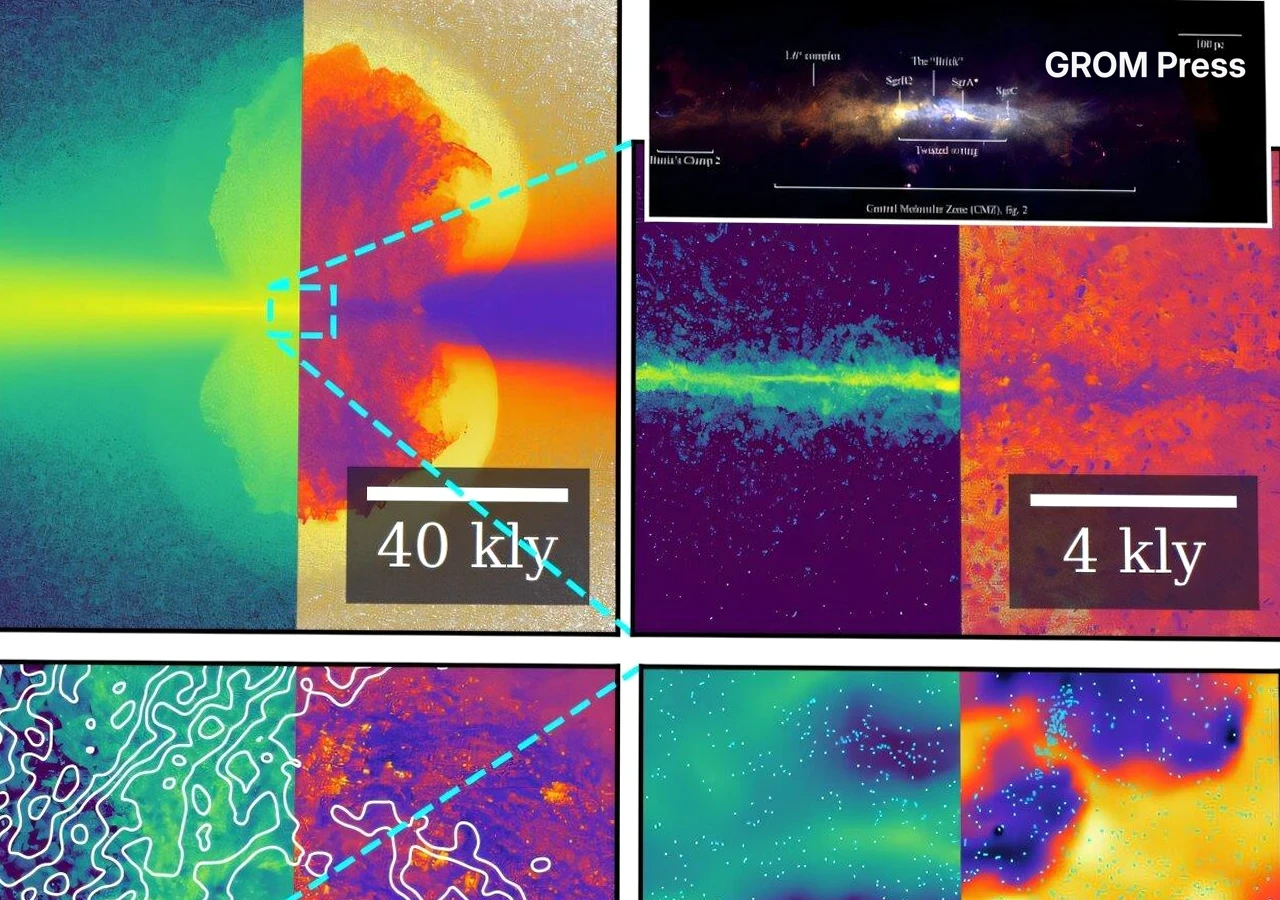
The PHEASANT project presented a star-by-star simulation of the Milky Way at the SC 2026 conference in Chicago, which took place from 15 to 20 November. The model tracks the movement of individual stars and interstellar gas using about 3.4 billion particles. It combines computing resources from three supercomputer systems equipped with AMD, Intel and Nvidia hardware.
One of the main computational challenges is modelling supernovae. An exploding star heats and accelerates surrounding gas, creates enormous hot gas bubbles and can influence the formation of new stars. These processes occur on timescales that are difficult to include directly in calculations of the entire galaxy. To address this, the team used an artificial intelligence model developed by Keiya Hirashima of the Japanese institute Riken. Instead of sequentially calculating 100 years of gas evolution, the model predicts the state of the gas 100,000 years ahead. This approach accelerated the relevant part of the simulation by 20 times. The acceleration applies specifically to calculations related to gas evolution around supernovae, not to the entire simulation.
Read the full story on GROM.PRESS
Source: GROM.PRESS