Scientists test semiconductor plasma technology to extract oxygen from lunar soil
Researchers exposed artificial lunar regolith to fluorine-containing plasma used in chipmaking and detected oxygen, carbon dioxide and carbon monoxide release. The experiments were conducted below 400 °C without liquid reagents, but only with simulated soil, so practical lunar oxygen production remains distant.
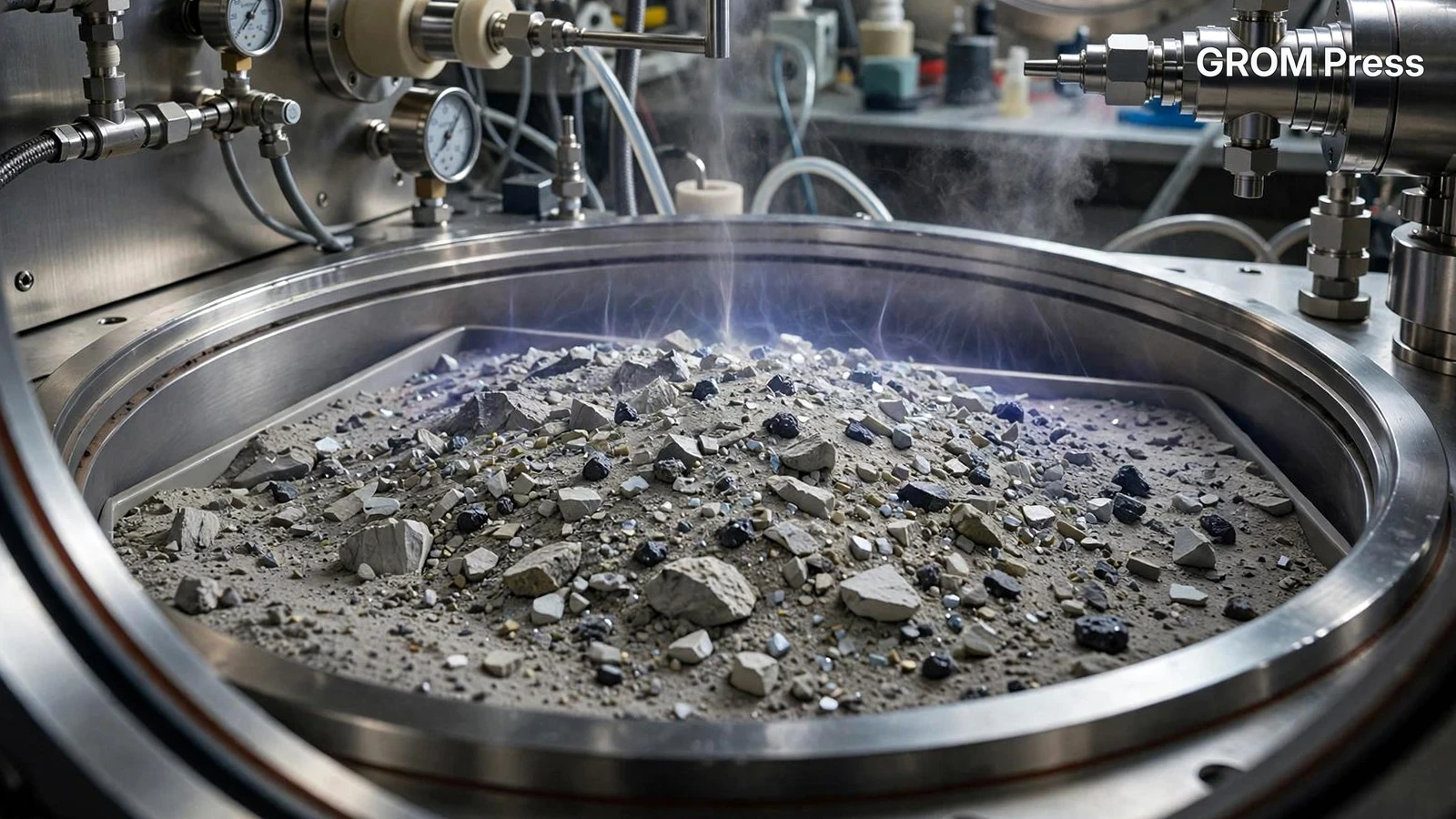
Scientists have tested a plasma-based method for extracting oxygen from lunar regolith, adapting a technique long used in semiconductor manufacturing. The researchers exposed artificial lunar soil to plasma generated from two fluorine-containing gases, sulfur hexafluoride and octafluorocyclobutane, both used in chip production. The treatment took place without liquid chemical reagents at temperatures below 400 degrees Celsius.
The experiment detected the release of oxygen, as well as carbon dioxide and carbon monoxide. Analysis using X-ray spectroscopy, X-ray diffraction and photoelectron spectroscopy showed that different plasma compositions affected the minerals in the simulated regolith differently. Plasma from sulfur hexafluoride reacted mainly with anorthosite, a rock rich in feldspars, while octafluorocyclobutane plasma affected other components of the simulated soil as well.
Read the full story on GROM.PRESS
Source: GROM.PRESS